
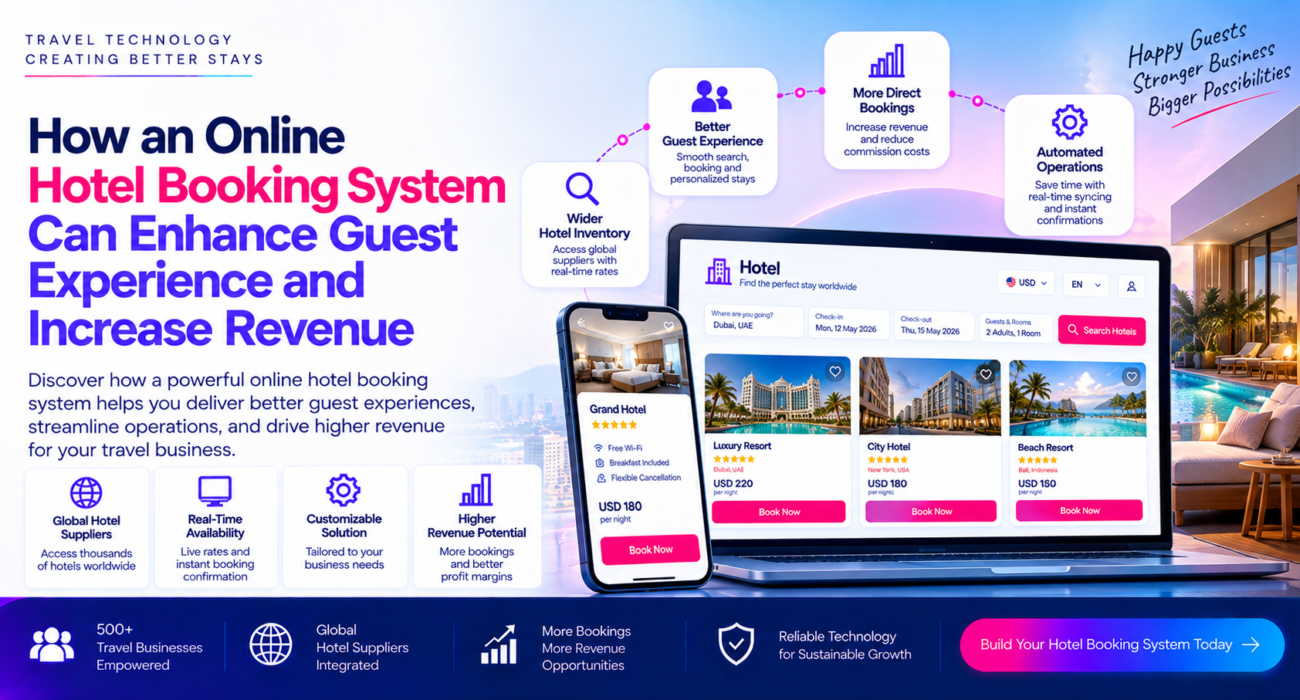
How an Online Hotel Booking System Can Enhance Guest Experience and Increase Revenue
Your guest does not start experiencing a hotel when they walk through the lobby doors. The experience often starts several days or weeks earlier when they visit the hotels website and try to make a booking. They check the available dates look through room options compare room types see whether breakfast is included or not and check the final price. Then they enter their details and make and make the payment. The entire process can take just a few minutes but it can also have a direct effect on whether the guest completes the reservation. For hotels this makes Online Hotel Booking System much more than just a tool for recording reservations. It becomes a part of your guests first interaction with the property and an important part of the hotels direct sale process. A well planned system can make it easier for guests To book and give you more control over your direct booking channel support relevant upgrades and add ONS. The important part is understanding how the pieces work together. And online hotel booking system does not automatically create any bookings. Your pricing demand and marketing all matter. But when someone is ready to book the booking experience can either help them complete the reservation or give them reasons to leave.
What is an online hotel booking system?
An online hotel reservation system allows your guests to check room availability, view rates and booking conditions, then select a room, provide the details, make a payment, and receive reservation confirmation online. It is different from a regular hotel website. A hotel website mainly provides information about the property; it might show rooms, photographs, and other details that help a traveler decide whether they want to stay there.
Guests can use it to:
- Check available rooms
- Compare room and rate options
- Select a room
- Enter guest details
- Make payment
- Receive confirmation
- Cancel or manage a reservation
An online system can also connect the hotels direct channel with the wider reservation and distribution workflow. So having your hotel website and having a booking system are 2 different things.
The guest experience starts before the guest arrives
Consider 2 guest looking for a hotel. Both find the same property and both are ready to book. The first guest can quickly compare the hotel rooms understand what is included and see the cancellation conditions while the second guest has to click through several pages to understand which room includes breakfast. The price changes at checkout and the cancellation policy is difficult to find. The hotel itself has not changed but the booking experience has. This is the only reason why you should not just look at the booking engine as a simple reservation tool.
1. Make room information easy to understand
Your guests need enough information to compare rooms without having to search through the website repeatedly. The booking page should make important details clear including the room type occupancy and bed configuration. For example if one rate includes breakfast and another does not the difference should be immediately visible.
2. Be clear about the price
Price is one of the first things that your guests compare but the number alone is not enough, they also want to know what they are getting for their price. If taxes fees restrictions are important conditions appear only at the final stage your guest might question whether the offer is attractive as it first appeared.
3. Keep checkout practical
Once your guest has selected a room the final booking process should not become a separate obstacle. The system should collect information required to make the reservation without turning a simple booking into a long form.
Where the Online Hotel Booking System fit into hotels revenue journey?
The booking engine is one part of a larger hotel technology environment. Depending on the setup the booking system might also connect with channel manager payment gateway CRM and revenue management system. The exact architecture will differ from one hotel to another. An independent hotel might have a relatively simple setup. A hotel group or any chain might have several connected systems distribution payments and customer information. The important point is the booking hotel booking system should not operate as an isolated checkout page.
What makes guests abandon a hotel booking?
Your guest might be ready to book and still leave before completing the reservation. Sometimes the problem has nothing to do with the hotel itself. The booking process might simply create too much friction. Common issues include too many booking steps and clear home information or unexpected charges and slow pages. That can make the process difficult. Your guest might be willing to pay for flexibility but they also need to understand the difference between the available rates before choosing one.
How online hotel reservation system can support direct bookings?
Hotels often receive bookings through several channels. You might discover a property through an OTA and book there while another person might just visit your hotels website directly and make a reservation. The 2 journeys look really different. An online hotel booking system gives your hotel its own digital channel for completing the second type of booking. This can give your hotel greater control over the booking experience. You can present your own branding room information and packages.
Which Features Should a Modern Hotel Booking System Include?
The right feature set depends on the property, its booking model, and the technology already in place. However, several capabilities are commonly important.
| Capability | Why It Matters |
| Live availability | Helps guests see bookable rooms |
| Room and rate comparison | Makes it easier to choose between options |
| Clear cancellation rules | Gives guests a better understanding of booking conditions |
| Online payment | Allows the reservation to be completed digitally |
| Instant confirmation | Gives guests immediate booking reassurance |
| Mobile booking | Supports reservations on smaller screens |
| Upselling | Creates opportunities for relevant additional purchases |
| Multiple currencies | Useful for international guests |
| Promotions | Supports direct booking campaigns |
| Booking management | Helps guests and staff handle changes |
| Reporting | Gives the hotel visibility into booking and revenue performance |
Revenue does not end with the room rate
Hotel reservation can sometimes be worth more than the room itself. During the booking journey or hotel might have an opportunity to offer relevant services that make your guests stay easier or more enjoyable. Depending on the property it might include breakfast airport transfers extra bedroom upgrades or spa services. For example instead of just presenting the room rate you can also include deluxe room and breakfast or deluxe room plus airport transfer. This creates an opportunity to increase the value of the reservation without simply raising the room rate. But upselling needs to be relevant.
Can personalization make hotel booking more relevant?
Personalization does not have to mean adding complicated technology to every part of the booking process. Sometimes it is just about presenting information that makes sense for your guest. A returning guest might be recognized based on previous booking information where appropriate. A family traveling might see just room configurations designed for multiple guests. A business traveller might be more interested in flexible rates or relevant business amenities. When done properly personalization can make the booking process feel more useful rather than just more complicated.
When should you consider replacing your existing booking system?
Not every hotel needs to replace the entire technology stack. Sometimes the problem can be addressed through an integration upgrade or a better booking engine. But there are certain signs that the current setup might need to be reassessed. For example your hotel might be still receiving a large number of reservations through calls or emails because online booking is difficult. Your guests might struggle to complete bookings on mobile or staff might have to manually enter online reservations. Other warning signs include difficulty managing upsells or payment failures that are hard to track. It is where is the current booking process creating unnecessary work or losing opportunities? The answer can help determine whether your hotel needs a complete replacement or more focused Online Hotel Booking System.
How Traveltekpro Can support a better hotel booking experience?
The role of hotel technology is to connect the guests facing booking experience with the systems managing the reservation behind the scenes. Traveltekpro works around capabilities like online hotel booking system Reservation workflows payment integration and wider travel platform integration. For your hotel this can mean looking at the complete journey rather than just treating a booking engine as a separate website component. Your guest searches for a room checks availability and makes a payment and receives confirmation. Behind that journey the reservation might need to connect with the hotels operational systems. For your travel business selling hotel inventory the requirements can go further into B2B or B2C workflows. The technology should therefore be planned around your actual business and reservation workflow.
Read More: Where to Find the Best B2B Hotel Booking Portal for Travel Agencies
FAQ’S
1. How can hotels increase direct bookings?
Hotels can increase direct bookings by offering a convenient online hotel booking system that lets guests check room availability, compare rates, understand cancellation policies, make payments, and receive confirmations directly through the hotel’s website. Clear pricing, mobile-friendly booking pages, relevant room packages, promotional offers, and a simple checkout experience can help reduce booking friction and give hotels greater control over their direct sales channel.
2. What causes hotel booking abandonment?
Hotel booking abandonment can occur when guests encounter slow-loading pages, too many checkout steps, unclear room information, unexpected charges, or confusing cancellation conditions. A well-designed hotel reservation system should display room details and total pricing clearly, explain rate differences, and make it easy for guests to complete their reservations on desktop or mobile devices.
3. How does a hotel booking engine increase revenue?
A hotel booking engine can support revenue growth by enabling direct reservations, presenting different room categories and rate plans, and offering relevant extras during the booking process. Hotels can offer options such as breakfast, room upgrades, airport transfers, or spa services, helping increase the value of a reservation when the additional products match guest needs.
4. Can a hotel booking system integrate with a channel manager?
Yes, an online hotel booking system can connect with a channel manager, payment gateway, customer relationship management system, and revenue management system, depending on the hotel’s technology setup. These integrations help connect the guest-facing booking journey with reservation and operational workflows, although the exact integration requirements vary between independent hotels and larger hotel groups.
5. What features should a hotel reservation system have?
A modern hotel reservation system should support live room availability, room and rate comparison, clear cancellation policies, online payments, booking confirmations, mobile reservations, promotions, multiple currencies, booking management, and reporting. Depending on the hotel’s requirements, upselling features and integrations with existing hotel systems can also help improve the guest experience and streamline reservation operations.
6. When should a hotel upgrade its booking system?
A hotel should consider upgrading its booking system when guests struggle to book on mobile devices, staff frequently enter reservations manually, direct booking processes generate unnecessary support requests, or payment failures and additional sales opportunities are difficult to manage. An integration upgrade or improved booking engine may be sufficient in some cases, while more extensive replacement may be appropriate when the existing system cannot support the hotel’s operational needs.


